The Complete Guide to Renting a Campervan in Japan / Carstay

東京出身で、現在はスウェーデンに住んでいる大学生です。 よろしくお願いします!
Carstay lets you rent a campervan from a local owner and book legal places to sleep in it, all on one platform. Owners who rent out campervans are called holders. Hosts offer overnight spots called Carstay Stations.
This guide takes international guests through every step, from checking your driver's license to handing back the keys. Rules and policies are current as of October 2026.
Step 1: Check that you can drive in Japan
Under Japan's Road Traffic Act, you need one of these three to drive. A foreign license on its own is not enough.
- A Japanese driver's license
- An International Driving Permit (IDP) issued under the 1949 Geneva Convention on Road Traffic
- A license issued in Switzerland, Germany, France, Belgium, Monaco or Taiwan, with an official Japanese translation
With an IDP or a translated license, you can drive for up to one year from the day you land in Japan, as long as the documents stay valid. Keep your passport with you: police may ask to see your arrival date.
International Driving Permit (IDP)
Most international guests drive with an IDP. Check these points before you travel.
- Get it at home. IDPs are issued in the country that issued your license, by a licensing office, the police or an authorized automobile association, depending on the country. You cannot get one after you arrive in Japan.
- Check the convention. The cover must say "Convention on Road Traffic of 19 September 1949". IDPs issued under the 1926 Paris, 1943 Washington or 1968 Vienna conventions are not valid in Japan.
- Check your country. IDP formats differ by country and region, and not every country issues a Geneva-format IDP. Mainland China, Vietnam, Brazil and Indonesia, for example, are not parties to the Geneva Convention, so IDPs from these countries can't be used in Japan. See the National Police Agency's list of IDP formats.
- Check the dates. An IDP is generally valid for one year from its issue date, and it must be valid on every day you drive.
- Check the vehicle category. Your IDP must be stamped for the type of vehicle you will drive. Carstay checks this when it verifies your account.
- Carry all three: your IDP, your original home-country license and your passport.
Home license + official Japanese translation
If your license was issued in Switzerland, Germany, France, Belgium, Monaco or Taiwan, you can drive with your original license and an official Japanese translation instead of an IDP. Only translations from these issuers are valid:
- the authority that issued your license, or your country's embassy or consulate in Japan
- the Japan Automobile Federation (JAF)
- other organizations designated by Japan's National Public Safety Commission, such as ZIPLUS Inc.
- ADAC, for German licenses only, and the Taiwan-Japan Relations Association, for Taiwanese licenses only
Translations by private or sworn translators are not accepted. Carry your original license, the translation and your passport whenever you drive.
Plan ahead if you use JAF. JAF takes applications online only, and only from within Japan. You print the translation at a Japanese convenience store, usually 2 to 3 business days later. If you pick up your campervan soon after landing, get a translation you can obtain before you travel.
Drivers from Estonia: Estonia is no longer on this list. Estonian license holders now need a Geneva-format IDP.
Official rules: National Police Agency and JAF's translation service.
Step 2: Create your account and get verified
Carstay checks every guest's license before a booking can go ahead, and holders cannot approve your request until you are verified. Upload your documents under License information in My Account.
If you drive with an IDP, upload clear photos of two pages:
- the page with your personal details and photo
- the page listing your vehicle categories, with their stamps
If you drive with a license and translation, upload:
- the front and back of your license
- a selfie holding your license
- the official Japanese translation
Shoot in good light, in focus, with the whole page in the frame. If anything needs fixing, Carstay emails you from noreply@carstay.jp, so make sure those emails reach your inbox.
Getting your translation from JAF after you land?
Register your license and selfie first, then contact Carstay. Carstay may verify you in advance if you send the translation by the first day of your rental and show it at pickup.
More detail: Guest Account Registration and Using a Foreign License with an Official Japanese Translation.
Step 3: Choose and book your campervan
With a license issued outside Japan, you can book the campervans listed on Carstay's English car list. You can search by departure place, including Narita and Haneda airports.
Traveling with someone who holds a Japanese license? They can book as the main contractor and add you as a driver, which opens up car-sharing vehicles too. Every driver must register and be verified, because insurance does not cover unverified drivers.
Pick the right size
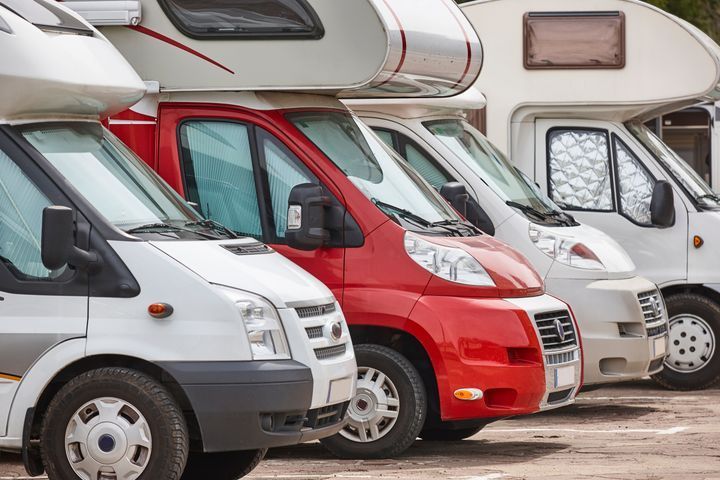
Japanese roads, car parks and mountain passes are narrow, so it's better to choose smaller campervan that fits your group.
- Kei camper: the smallest type, built on a mini vehicle, for 1 to 2 people. Easy for beginners.
- Van conversion: built on a one-box van or minivan, for 1 to 4 people. Beginner-friendly.
- Cab-over camper: truck-based, with a bed over the cab, for 2 to 6 people. Best with some large-vehicle experience.
- Motorhome: the largest and best-equipped, for 2 to 10 people. For experienced drivers.
Message the holder before you request
Bookings work by request: you send one, the holder approves it, and only then is your booking confirmed and your card charged. Holders can decline, so message them first in the Carstay chat and confirm:
- pickup and return place and times, including whether airport pickup is possible
- each driver's license type (IDP or translation)
- whether a deposit is required
- which insurance applies
- what is included, such as bedding, kitchen gear, an ETC card, winter tires and pets
Turn on notifications in the Carstay app so you don't miss replies.
Deposits
Holders may ask guests who drive with an IDP for a deposit, typically around ¥100,000, refunded after the trip if all is well. It is the only payment Carstay allows outside its platform, so Carstay cannot compensate for deposit problems. Agree on these points in the chat and keep the record:
- the amount and its purpose
- how you pay
- when and how it is refunded
- what happens if there is damage
Insurance
Every listing shows whether the holder is a car-sharing operator or a rental company, and which insurance applies.
- Car-sharing vehicles are covered automatically during your booked time by Carstay's car-sharing insurance, underwritten by Sompo Japan. It includes 24/7 accident support and roadside assistance.
- Rental-company vehicles are usually covered by the holder's own rental insurance. Ask the holder for the details.
Damage to the campervan itself is covered only up to set limits, usually with a deductible you pay. Rental insurance has its own terms, so check them with your holder. Carstay's car-sharing insurance may not pay for damage from:
- distracted or drowsy driving, or speeding
- carrying more people than the vehicle allows
- filling up with the wrong fuel
- ignoring height limits at car parks or underpasses
- anything that happens outside your booked time
- an accident not reported within 72 hours
- picking up or returning the vehicle without meeting the holder in person
- earthquakes, volcanic eruptions and tsunamis
Full terms: car-sharing insurance details (Japanese).
Cancellations
While your request is waiting for approval, you can withdraw it for free. Once the holder approves it, cancellation fees apply and vary by vehicle, so check the terms on the listing before you book. Carstay Stations are free to cancel until 17:00 two days before your stay; after that, you pay the full price.
Payment and refunds
You pay by credit card through Carstay. Refunds are processed right away, but your card issuer may take 5 to 10 business days to show them, or 14 to 60 days for debit and prepaid cards. After a booking change, your statement may briefly look like a double charge, and exchange rates may make the refunded amount differ.
Ready to choose?
Step 4: Pick up your campervan
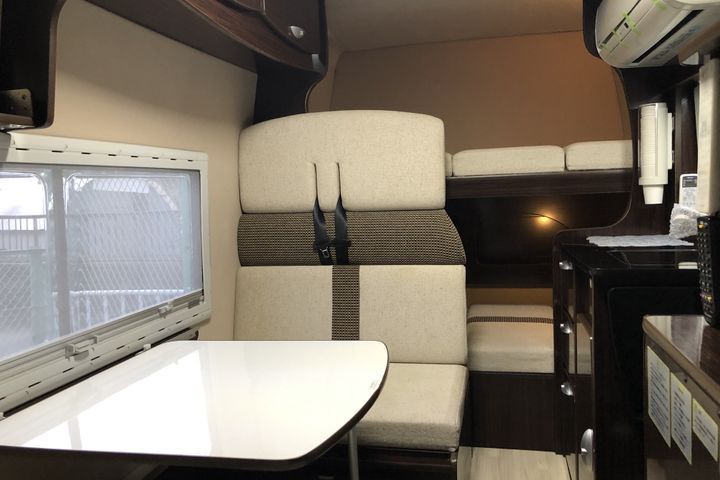
Meet your holder in person at the agreed place and time, with time to spare. If you are running late, message them in the chat. If they can't reach you after the handover time, it is treated as a same-day cancellation.
What to bring
- your passport
- your IDP and home license, or your license and official translation
- the licenses of every registered driver
- the deposit, if you agreed to pay it at pickup
Check for damage together
Walk around the campervan with the holder and photograph any existing damage. Focus on the spots that get hit most often:
- all four corners, especially the rear left
- the roof corners of cab-over campers
- the ladder, tow hitch and anything else sticking out at the back
- the area just in front of the rear left wheel, which cab-overs often scrape when turning
- roof equipment such as solar panels, vents, air conditioners and antennas
- the appliances inside, to make sure they all work
In the dark or rain, use a flashlight. You will check the same spots together when you return.
Get a walkthrough
Before you drive off, ask the holder to show you:
- Fuel type. Many campervans run on diesel, labeled 軽油 (keiyu) at the pump. Keiyu translates as "light oil", but it is diesel, not gasoline.
- Height and width. Note the exact height. Roof vents and air conditioners can make the vehicle taller than its registration says.
- Living equipment. How the leisure battery charges, plus the water tanks, heater and bed setup.
- ETC. Whether the vehicle has an ETC unit and card (see Step 5).
- Insurance and contacts. Which insurance applies, the holder's phone number and how to send an extension request.
Then complete the handover checklist together.
Step 5: Drive safely in Japan
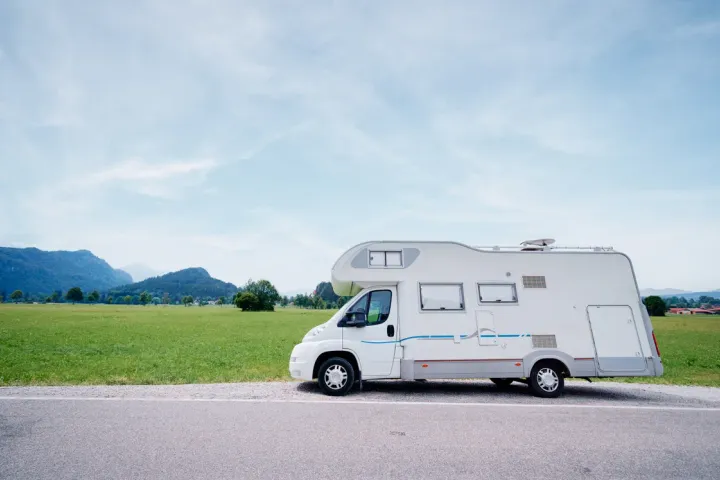
Japan drives on the left, and traffic rules are strictly enforced. These are the rules international drivers most need to know.
The basics
- Keep left. Most vehicles have the steering wheel on the right.
- Zero alcohol. Don't drink at all before driving. Passengers who ride with a drink-driver, and anyone who supplies them with alcohol, can be penalized too.
- Seat belts are required in every seat, and children under 6 must ride in a child seat.
- No phones. Don't hold a phone or operate the navigation system while driving.
- Pedestrians first. Stop for people at crosswalks.
- Give cyclists space. Since 1 April 2026, if you pass a cyclist without enough room, you must slow to a safe speed.
- Stay within capacity. Never carry more people than the vehicle is registered for.
Speed limits
Follow the posted limits. Where none are posted:
- 30 km/h on ordinary roads with no center line or lane markings, which covers most narrow residential streets (since 1 September 2026)
- 60 km/h on other ordinary roads
- 100 km/h on expressways
Campervans are tall and catch the wind, so Carstay recommends 80 to 90 km/h on expressways.
Signs and crossings
- 止まれ (STOP): a red, upside-down triangle. Stop completely at the line.
- Red lights: no turning on red unless a green arrow shows.
- Flashing red: stop, then go when it is safe.
- Railway crossings: stop before every crossing, look and listen, then cross, unless a signal there shows green.
Expressways and tolls
- Most expressways charge tolls. Stay in the left lanes and use the right-hand lane only to overtake.
- More and more toll gates are ETC-only, with no cash lane. Ask your holder whether your campervan has an ETC unit and card.
- Entered an ETC-only gate without a card? Never reverse. Take the lane marked サポート (Support), stop, and follow the staff's instructions over the intercom.
- Discount expressway passes for foreign visitors are sold only through participating rental car companies, bundled with their ETC cards. Check with your holder before counting on one.
- Some stretches have no fuel stations for long distances, so fill up before you get on.
Filling up
- Most stations are self-service, marked セルフ. Where nozzles are color-coded, red is regular, yellow is high-octane and green is diesel.
- Diesel is labeled 軽油 (keiyu). Check your fuel type twice.
- Put in the wrong fuel? Don't start the engine; call your holder right away. Wrong-fuel damage may not be covered by insurance.
- Rural stations can be far apart and may close in the evening, so top up early.
Handling a campervan
- Know your height. Many car parks have height limits of 2.1 m or 2.3 m, and tunnels and underpasses have limits too. Damage from ignoring one may not be covered by insurance.
- Turn later and slower than in a car. You sit near the front, the rear wheels cut inside the corner, and the back can swing out by up to 50 cm.
- Slow down before curves, and take care in crosswinds on bridges and coastal roads.
- Ask a passenger to guide you when reversing or squeezing through tight spots.
- Plan an easy return. Many accidents happen when drivers rush back, especially on Sunday and holiday evenings.
Winter driving
You need winter tires in snowy regions such as Hokkaido, Tohoku and the mountains, and some roads require chains in heavy snow. Before booking a winter trip, ask the holder whether the campervan has winter tires or 4WD.
More: JAF – Driving in Japan and Carstay – 10 tips for your first campervan drive.
Step 6: Sleep only where it's allowed
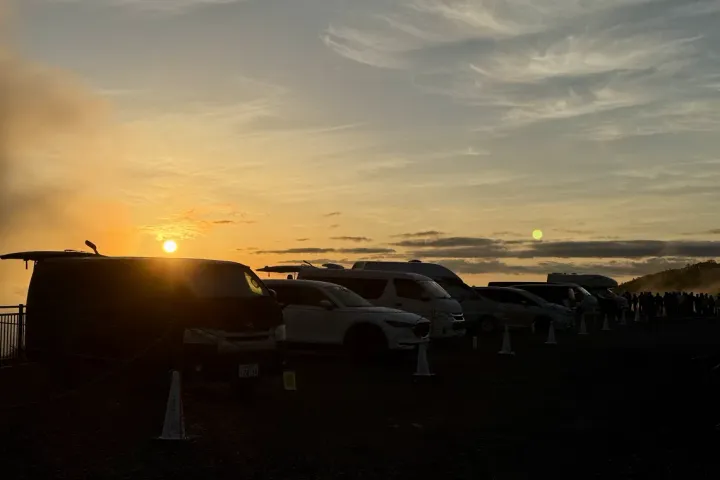
You can stay overnight in your campervan only where it is permitted, so book a spot for every night of your trip.
Carstay Stations
Carstay Stations are overnight spots you book on Carstay under Find a Car Staying Place. They range from RV stations at expressway parking areas to hot spring facilities, campgrounds and private land in the countryside.
- Facilities vary, so check each listing for power hookups, toilets, trash disposal and any fees.
- Check-in works differently at each station. Read your reservation email and message the host.
- Park only where the host tells you; many stations mark your space with white cones.
- Cancellation is free until 17:00 two days before your stay.
Roadside stations and expressway rest areas
Michi-no-eki (roadside stations) and expressway service and parking areas (SA/PA) are open 24 hours for breaks and naps, not for camping.
- Japan's Ministry of Land, Infrastructure, Transport and Tourism (MLIT) says a nap to recover from fatigue is fine, but asks drivers not to stay overnight in roadside station car parks. Some stations have dedicated overnight spaces; check their websites.
- Expressway operators such as NEXCO East Japan prohibit camping, barbecues, unnecessary engine running and long stays at SA/PA.
- Some roadside stations ban car camping outright, so follow the signs.
Never set up tables, chairs, awnings or tents in these car parks.
Everywhere else
Don't sleep in your campervan on the street, in parks or on private land without permission. If you are not sure a place allows overnight stays, move on to a booked spot.
Step 7: Follow campervan etiquette
Campervan travel in Japan depends on the goodwill of local communities, so leave every place as quiet and clean as you found it.
- Turn off the engine when parked. Don't idle to run the air conditioning or heater.
- Keep noise down at night and early in the morning, including doors, music and voices.
- Park inside your space. Never use accessible parking spaces, and leave truck and bus spaces free unless you drive a large motorhome.
- Take your trash with you. Don't put household trash in bins at rest areas or roadside stations. Some Carstay Stations accept trash for a small fee.
- Empty gray water and toilet cassettes only at designated dump points, never into drains, rivers or the ground.
- Light fires or barbecues only where the site explicitly allows them.
- Ask before plugging in to a power supply; it may cost extra.
- Check pet rules with each station, even if your campervan allows pets.
- Watch for wildlife. Bears live in many mountain areas, so follow local warnings and never leave food or trash outside.
- At hot springs (onsen), wash before you get in, and check the tattoo policy in advance, since many places restrict visible tattoos.
More: Carstay – car camping etiquette.
If something goes wrong
Save these numbers before your trip:
- 110 for police
- 119 for fire and ambulance
- 050-3816-2787 for the Japan Visitor Hotline, run by the Japan National Tourism Organization. It helps 24/7 in English, Chinese and Korean with accidents, illness and natural disasters.
After an accident, even a small one
Any damage to the campervan counts as an accident, however minor, and whether or not another vehicle is involved.
- Make it safe. Turn on your hazard lights, move out of traffic if you can and turn off the engine. Help anyone injured and call 119.
- Call the police on 110. You must report every accident. Without a police report you can't get the accident certificate your insurance needs, and leaving the scene can count as a hit-and-run.
- Tell your holder. Message them in the Carstay chat with the location, what happened, whether the campervan can still be driven, and photos of the damage. Then call them; their number is in your reservation email.
- Contact the insurer for your vehicle: Carstay's car-sharing insurance or the holder's rental insurance. Make sure the accident is reported within 72 hours.
- Can't return on time because of it? Send an extension request from your booking page. Insurance does not cover anything outside your booked time.
Breakdowns
Turn on your hazard lights and get the campervan out of traffic. On expressways, set up a warning triangle if the vehicle has one, then wait behind the guardrail rather than inside the vehicle. Contact your holder, then the roadside assistance that comes with your insurance. JAF also runs a 24/7 road service on #8139, which charges non-members.
Earthquakes, tsunamis and typhoons
- Install Safety tips, the Japan Tourism Agency's app, for earthquake, tsunami and weather alerts in English.
- If an earthquake hits while you are driving, slow down gradually, pull over to the left and turn off the engine. If you must evacuate on foot, leave the key inside and the doors unlocked.
- On the coast, move to high ground as soon as the shaking stops or a tsunami warning is issued.
- Typhoons and heavy snow can close roads. Check the forecast daily and talk to your holder early if your plans need to change.
Step 8: Return your campervan
Return the campervan on time, refueled and cleared out, and check it over with your holder.
- Refuel with the correct fuel, unless your holder says otherwise.
- Clear out your trash and belongings, and empty the gray water tank as your holder instructed.
- Check for damage together at the same spots you checked at pickup.
- Running late? Send an extension request before your return time and message the holder. Insurance stops at the end of your booking.
- Leave a review for your holder and hosts to help the next traveler.
Your trip checklist
Before you fly
- Geneva-format IDP, or home license plus official Japanese translation
- Passport valid for the whole trip
- Carstay account verified
- Booking approved; pickup place, time and any deposit agreed in the chat
- Insurance and cancellation terms checked
- An overnight spot booked for every night
- Carstay and Safety tips apps installed, with notifications on
At pickup
- Passport and licenses for every driver
- Existing damage photographed with the holder
- Fuel type, vehicle height, ETC and insurance contacts confirmed
At return
- Tank refueled with the correct fuel
- Trash, belongings and gray water cleared
- Damage checked together with the holder
Your Japan road trip starts here
With a campervan, your ride and your bed travel together. Change plans with the weather, linger where you like, and wake up to a new view each morning.
The preparation in this guide comes down to three things: the right license, a verified Carstay account and a booked spot for every night. With those in place, the rest of the trip is yours to enjoy, and your holder is one chat message away whenever you have a question.
Choose a campervan that fits your group, say hello to the holder, and start planning your route.
Ready for the road? Find your campervan on Carstay
Useful links and sources
Questions about your booking? Ask Carstay AI, available 24/7 in the help center, or contact Carstay.
Carstay
- Guest help center (mostly Japanese, with an English section for foreign licenses)
- For customers using a foreign driver's license
- What is a deposit?
- Refunds and payment adjustments for international cards
Driving rules and licenses
- National Police Agency: driving in Japan with a foreign license (Japanese)
- National Police Agency: 30 km/h limit on residential roads (Japanese)
- Tokyo Metropolitan Police: Geneva Convention countries and IDP formats (Japanese)
- Ibaraki Prefectural Police: ways to drive in Japan (Japanese)
- Hiroshima Prefectural Police: passing cyclists, from April 2026 (Japanese)
- JAF: driving a motor vehicle in Japan
- JAF: how to apply for a Japanese translation
Roads, rest areas and safety
東京出身で、現在はスウェーデンに住んでいる大学生です。 よろしくお願いします!
Related Posts










Top Posts
See all

Search from categories
Top Tags
See all tags
 Related Posts