Kinosaki Onsen
兵庫県/豊岡市

Description
This is an old hot spring in the northern part of Hyogo prefecture. The onsen opened 1300 years ago. It has been consistently been recorded as a highly ranked and regarded onsen. During the Meiji era(1868-1912), it was a place of healing for wounded soldiers during the Russo-Japanese war, and was also the setting for Shiga Naoya's "Kinosaki nite". It is a popular destination for those visiting the 7 hot springs along Otani River, and the willows trees along the river make for a magical landscape.
Homepage
Address
Nearby Car Night Spots

Overnight stay
Overnight stay
Overnight stay
Nearby Activities
There is no nearby activities
Ranking Stations
Overnight stay

Shin Meishin Suzuka PA (inbound) RV Station Suzuka * With Power!
¥2,200〜
/ per nightMie Yamamotocho, Suzuka-shi
4.3
(160)Overnight stay
Camping

Vanlife BASE | 45 min. from Narita Airport / Perfect for campervan travel/A seaside town rich in nature/Japanese countryside town/welcome traveler
¥7,000〜
/ per nightChiba Koseki, Kujukuri-machi, Sambu-gun
5.0
(64)Overnight stay

Overnight stay

Overnight stay
Nearby Drive Spots
Spot

Yuhigaura Beach
This is a bay area in the northern area of Kyoto, facing the Japan Sea. This is an ideal photo spot with its sunning sunset views. Visitors can also enjoy snorkeling in the shallow beach, for which the area is popular.
Spot
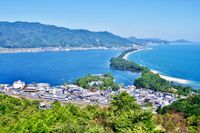
Amanohashidate
This is a 3.6 km sand dune that separates Miyazu Bay and Aso Sea from north to south and is one of the three major scenic spots in Japan. Over thousands of years, around 8,000 pine trees have grown here, and creates a mysterious landscape on the eastern side with the white sand scape. It is also said that if you bend down and look between your legs, the landscape will resemble a dragon rising up to the sky.
History
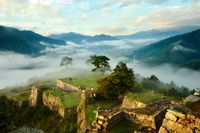
Takeda Castle Ruins
These are the remains of the Takeda castle built by Yamana Sozen in 1431. The castle fell during the Tanba district attack of Toyotomi Hideyoshi during the "Battle of Takeda Castle" and was destroyed completely during the battle of Sekigahara. The castle was originally built at the top of Mount Koga, and due to its geographical location and stunning views, would often be shrouded in clouds, giving it the name of the "Heaven castle" or "Japan's Machu Picchu".
Spot
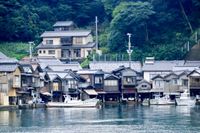
Ine no Funaya Houses
This is a type of traditional unique to the area, in Kyoto Ine Town. The building consists of a ship storeroom with living quarters above. The first floor has a ship warehouse as well as a storeroom and workship, with a living room on the second floor. It is thought that there are around 200 of these arbor shops in existence from the Edo era(1603-1868).
Spot
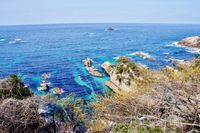
Uradome Beach
This is a 15km stretch of Ria type coastline along the norther Tottori prefecture area. There are various cliffs, rock and cave formations, with various sea birds inhabiting the area. It is also known as the "Matsushima of the Sanin area" as the area is said to resemble Matsushima in Miyagi prefecture. There is also a beach area which attracts visitors looking to enjoy beach and water activities.
Spot
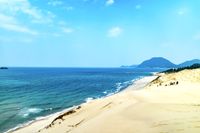
Tottori Sand Dunes
This is a 16km coastal sand dune, the largest in Japan, situated in Tottori prefecture. The three sand dunes are lined more or less in parallel with the Japan Sea, and the second middle sand dune, known as "the horse's back" is the most famous photo spot. The area is also popular for paragliders, hangglidesr and sand boats.
History
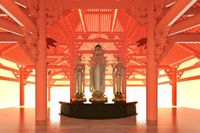
Jodoji Temple
This is a Shingon sect temple built in 1198 under the instruction of Chogen. The objects of worship are known as Yakushi Nyorai and Amida Nyorai and three great Buddha statues known as Amida Sansonzo, created by Kaikei are desiganated national treasures, along with Jodo do. At Mountain next to Jodoji Temple, there are around 10,000 hydrangea flowers along the path, providing a vividly colorful view.
Onsen
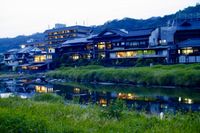
Misasa Onsen
This is a hot spring in the centre of Tottori prefecture. With 900 years of history, the onsen was loved by writers such as Yosano Akiko, Nogushi Ujo and Shiga Naoya. The area was known as a place of healing - so much so, that it was known as the place "where illness disappears by the third day of being here". Along both sides of Mitoku River, there are various traditional Japanese Ryokan, making this a popular onsen town to experience the nostalgia of the Japan of times past.
Spot
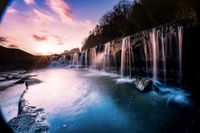
Kurotaki Falls
This is a waterfall that runs down the Mino River. With a height of 4 meters and a width of 30 meters, the waterfall has two stages, and the area is ideal for photography particularly due to the early morning glow. The area has also been a setting for various traditional folk stories and plays.※兵庫県 黒滝の朝 © Tomato_249 クリエイティブコモンズライセンス(表示4.0 国際)https://creativecommons.org/licenses/by/4.0/
History
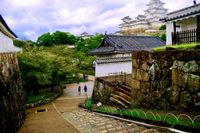
Himeji Castle
This is Japan's only world heritage castle built in 1346 under the instruction of Akamatsu Sadanori. It is one of Japan's 12 castle towers and one of 5 registered as a national treasure in Japan. It is also known as one Japan's three greatest castles. It was expanded by its respective castle owners such as Toyotomi Hideyoshi and Ikeda Terumasa during the Sengoku era(1467-1600), to become the impressive castle that it is today. Due to its impressive white appearance, it is also known as the "White Egret castle".